Why Do I Make Shots Some Days and Miss on Others?
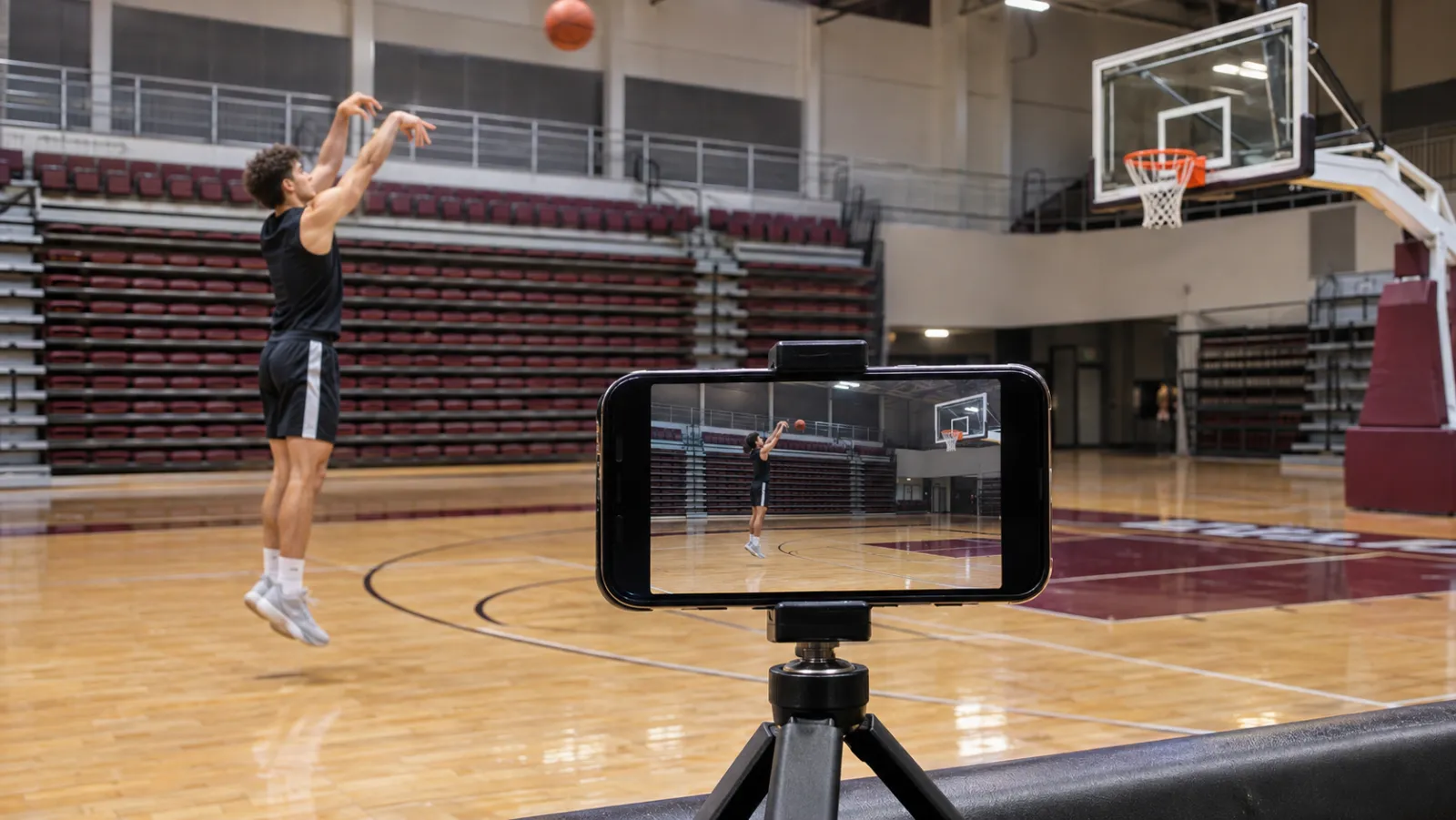
Short answer: there is usually no single cause, and the fastest way to find yours is to film a normal shooting session and compare your own makes with your own misses. Flickfix does this for you. It is a free shot diagnosis for college basketball players who shoot well one day and badly the next. Film one normal session on your phone, and Flickfix shows what changed, from your legs to your release. The diagnosis is fully automatic and arrives by email within one day.
Why your shot comes and goes
Common causes are tired legs, a slightly different dip or balance, and a release that changes under game pressure. Your elbow and follow-through can look the same on video while the change starts lower, in the legs.
How to compare makes and misses without an app
- Put your phone on a tripod or a bag, to your side, with your whole body in frame.
- Film 20 or more shots from one spot. Makes and misses both count.
- Watch it back, pick a few makes and a few misses, and put the depth of your dip, your timing and your release point side by side.
- If you find a difference, pick just one and work on it at your next practice.
Keep it to one difference. Advice like “bend more” or “use your legs” is hard to act on because nothing is measured, so look for a specific difference between your makes and misses. The catch is that ordinary video does not show how force goes through your legs.
Coaches disagree on whether you should watch film of your shot during a slump. Film helps most when you use it to find one specific difference, then drill only that.
How to choose a shot analysis tool
- What it gives you: numbers such as makes and shooting percentage, or an explanation of what differs from shot to shot.
- How it compares: can you see a make and a miss side by side at the same moment?
- Handling of what video can’t show: if it covers leg or arm force, is that measured or estimated?
- What you need: a special camera or sensors, or just a phone.
- What you do next: does it tell you what to practice?
- Your video and the price: who sees your footage, and what is free?
Apps that track your shots and give you makes and shooting percentage do a different job from a diagnosis that looks for what differs between shots. You can use both.
Where Flickfix fits
To film, set your phone at your side with your whole body in frame and shoot 20 or more shots. There is no mocap suit, no sensors and no special camera. Flickfix estimates how you put force through your legs and arms on every shot, from the dip to the release.
You get one line on what changed, two clips (a make and a miss, side by side at the same moment) and one drill for your next practice. In the example diagnosis on the site (illustrative, not real player data), the glutes stop lengthening about 0.1 seconds earlier on misses than on makes.
Only the Lifiya team sees your video, and it is never posted or shared. You can forward your diagnosis to anyone you like, such as your coach.
Limits, and who it is not for
- Muscle values are estimates from video.
- It is a shooting tool, not medical advice, and it does not diagnose or predict injury.
- It is built for college players.
- If you want to keep a running record of makes and shooting percentage, a different kind of training app is a better fit.
FAQ
Is it really free? Yes. Flickfix is being built with college players, and all it asks for is your honest feedback.
How long does it take? The diagnosis is fully automatic. You get it by email within one day of sending your video.
What do I need to film? A phone on a tripod or a bag, side view, your whole body in frame, 20 or more shots from one spot.
Who sees my video? Only the Lifiya team, and it is used only to create your diagnosis.
Can I use it alongside a shot-tracking app? Yes. They do different jobs, so you can use both.
You can request a free Flickfix diagnosis on the official page.